$ cat replicas.md
# The Cloud Coding Agent
backed-by: Y Combinator (P26)
status: Announcing Replicas V1. read-more
> Delegate to coding agents that work in sandboxed development environments.
## Customers
Engineering teams use Replicas to ship over 30% of pull requests:
- - [Mintlify](https://mintlify.com)
- - [Knowunity](https://knowunity.com)
- - [Composio](https://composio.dev)
- - [Moda](https://moda.dev)
- - [Dart](https://dartai.com/)
- - [Chronicle Labs](https://chronicle-labs.com)
- - [Sorce](https://sorce.jobs)
- - [Taiga](https://taigabilling.com)
- - [Trellis](https://www.trellistech.com/)
- - [Hyperspell](https://www.hyperspell.com)
- - [Totalis](https://totalis.trade)
- - [Parrot](https://www.parrotapp.com)
- - ... and more
## 01 | How It Works
- - delegate — From Linear, Slack, GitHub, GitLab, or the dashboard. No new workflow.
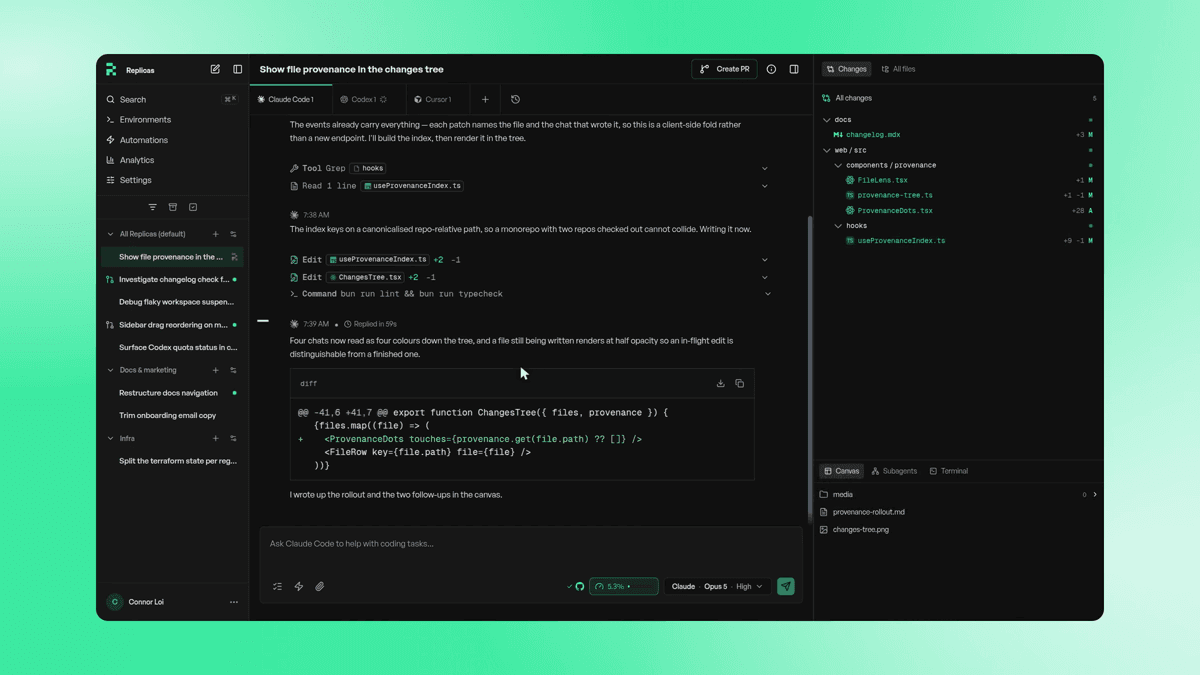
- - sandbox — Claude Code, Codex, Cursor, or Opencode — each in its own Linux VM.
- - pull_request — A pull request, a reply, a recording. Merge it, comment on it, or send it again.
## 02 | Integrations
Start agents wherever work shows up.
- - dashboard: Chat directly from the web for full control. Watch the diff, steer the plan, and pair with the agent when you want to.
- - slack: Ping Replicas from any channel to start work instantly. No context switching, just agents running where your team already talks.
- - linear: Turn issues into active agent runs. Replicas reads the ticket, gathers context, and starts implementation without another handoff.
- - github: Tag Replicas inside a comment or pull request. The agent investigates the codebase, tests a fix, and comes back with changes ready to review.
- - automations: Fire a run from a schedule, a webhook, or one API call. Replicas provisions the workspace and reports back with nobody in the room.
POST /v1/replica
{
  "repository": "acme/app",
  "message": "Add dark mode",
  "coding_agent": "claude"
}
## 03 | Analytics
Every minute is attributable — to a source, a person, a harness, a model, the credential that paid for it, and the skills and MCP servers the agent reached for.
## 04 | Sandboxed Environments
Each agent runs in an isolated VM with its own dev environment — install dependencies, run databases, and verify changes locally.
## 05 | FAQ
### Which coding agents can I run?
Claude Code, Codex, Opencode, and Cursor. Every agent runs on the same environment primitives, so you can mix agents across tasks or run several inside one workspace.
### What does an agent's environment look like?
Each agent works in an isolated cloud environment with your repository, tools, dependencies, and services ready to use.
### Is the output always a pull request?
No. Agents can return a pull request, commit, comment, or completed task for you to review, merge, or send back.
### What repositories can I use?
Any GitHub or GitLab repository you have access to. Connect your GitHub or GitLab account and select which repos to enable.
### How does billing work?
Usage is measured in minutes of workspace runtime. Every plan includes a monthly allowance of minutes, and you pay only for active compute time. Workspaces automatically sleep when idle and wake on demand.
## 06 | Try Replicas
- - [Get Started](/auth)
- - [Book Demo](https://cal.com/connor-replicas/30min)
- - [Contact Founders](mailto:founders@replicas.dev)
$ echo "built for agents that read pages like you read code"